
Highlights
This week focused on making developer workflows in the editor and on-device debugging more productive and reliable. Improvements to chat input, rendering, and model discovery help you move from conversation to code faster, while new debugger backends and parsing tools make hardware debug sessions more flexible and easier to understand.New features
VS Code extension: chat input, rendering, and message handling
You can queue messages while an agent is responding so your input is never lost and a pending badge shows queued counts. Code and markdown render more accurately with improved syntax highlighting and clickable file links so you can jump from chat output directly into the editor. Composer shortcuts for bash and serial modes plus layout tweaks keep input focused and readable.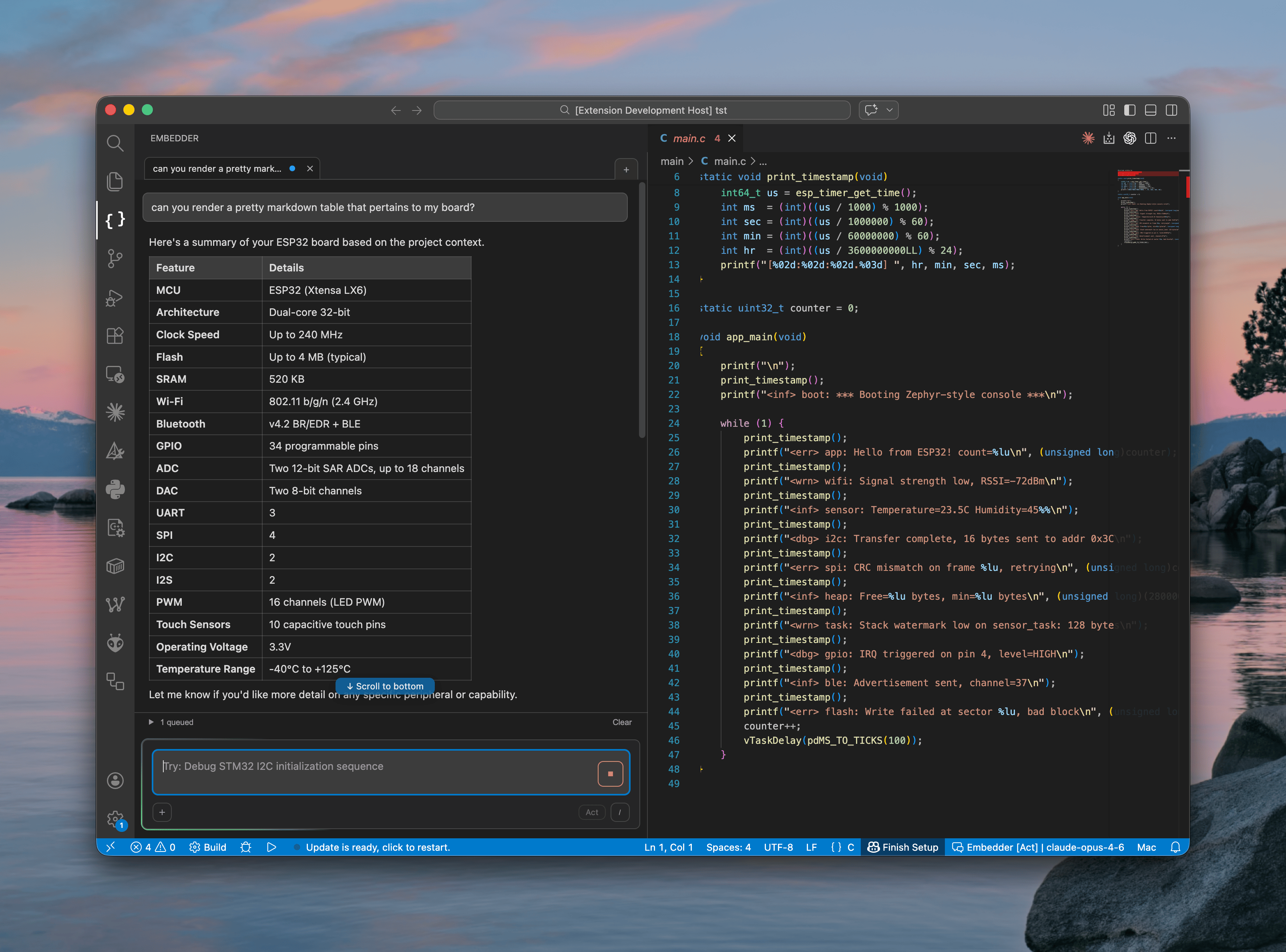
VS Code extension showing markdown table rendering and message queue indicator
GDB and probe backends for device debugging
OpenOCD is available alongside J-Link as a first-class GDB server backend with automatic selection based on project metadata and probe availability, so your debug tooling picks the right backend for the device. Lifecycle management, startup detection, error handling, and RTT integration make sessions more resilient, and enhanced GDB parsing plus a new gdbStateView tool surface clearer debug state for faster troubleshooting.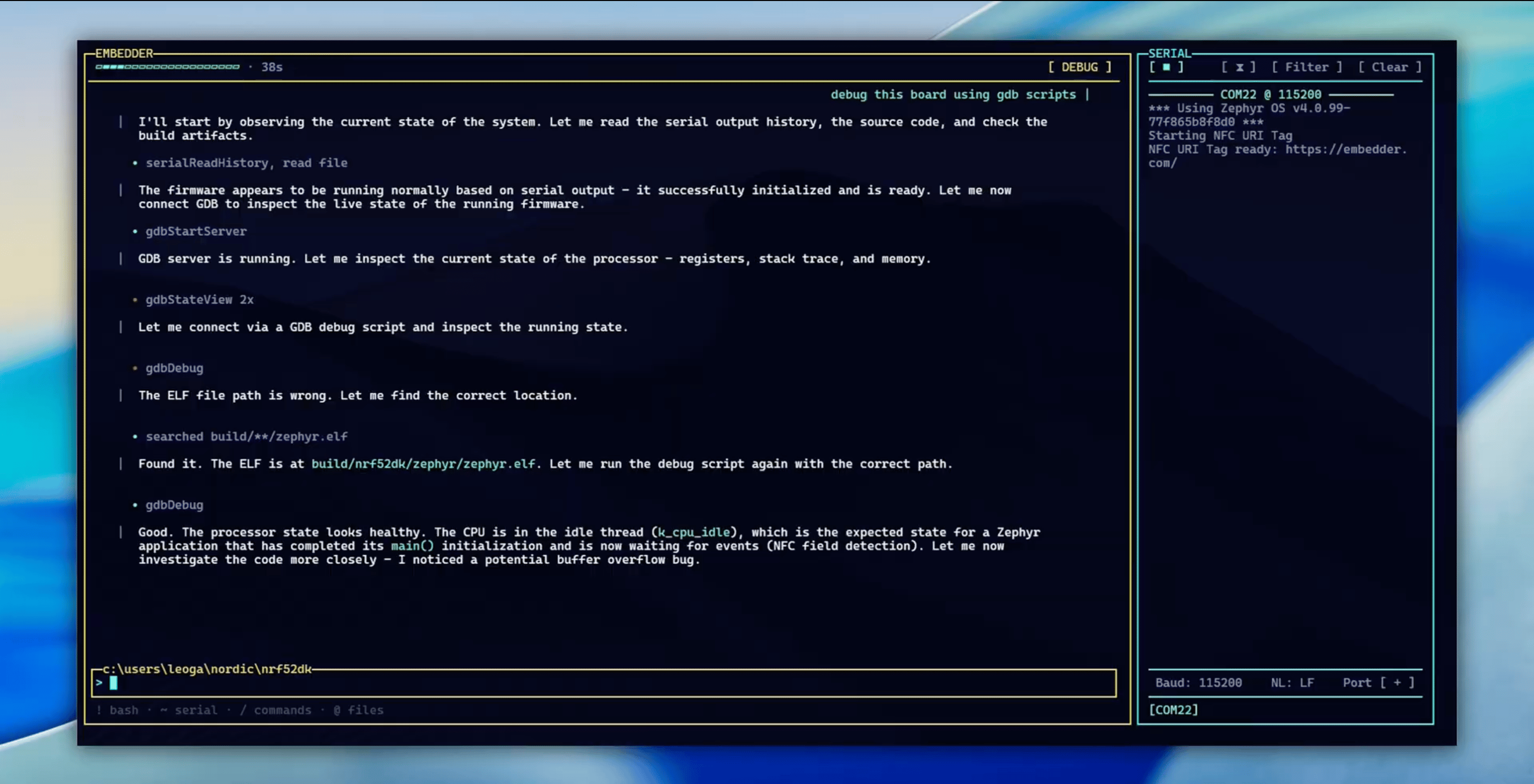
GDB debugging session showing processor state inspection and automatic ELF discovery
Mid-stream compression for long agent turns
Large or long-running agent turns now compress and resume automatically when context thresholds are reached, allowing conversations to continue smoothly across extended reasoning. This reduces interruptions while preserving relevant context so long tasks remain responsive and actionable.Miscellaneous
Enhancements
Enhancements
- Improved model information and search
- Improved serial baud rate controls
- Improved onboarding first-turn context
Bug Fixes
Bug Fixes
- Fixed model response persistence for multi-step tools
- Fixed bash command confirmation in VS Code
- Fixed /init prompt visibility in VS Code
- Fixed Windows serial DLL startup errors